Zimbabwe’s US$99m Zimplats Deal Solves One Problem — But Exposes a Bigger One
Zimbabwe’s US$99 million arrangement with platinum producer Zimplats may look like a straightforward settlement of money owed to a mining company.
It is more significant than that.
The deal offers a rare look into how Zimbabwe’s foreign-exchange surrender system, government finances, tax obligations and mining-sector working capital have become tightly connected. It also raises a bigger question: can Zimbabwe create a system where exporters are paid predictably, rather than requiring negotiated offsets when payment delays become too large?
The 30% system
Zimbabwe requires exporters to surrender part of their foreign-currency earnings.
Under the Reserve Bank of Zimbabwe’s current framework, exporters retain 70% of gross export proceeds while 30% is surrendered at the prevailing interbank rate. The arrangement is designed to ensure foreign currency enters the formal market while also generating local-currency liquidity.
But the mechanism becomes complicated when the surrendered portion is not settled promptly.
For a mining company operating with substantial capital requirements, a delayed payment is not simply an accounting entry. It becomes working capital tied up in the financial system.
The Reserve Bank itself acknowledged in its 2026 Monetary Policy Statement that stakeholders had raised concerns that delays in payment of the ZiG portion of export surrender were affecting business viability and exporters’ ability to meet statutory ZiG obligations.
That distinction matters.
A policy intended to create liquidity can become a liquidity problem for the very companies generating export earnings.
When an exporter becomes a creditor
Zimplats illustrates the problem.
At the end of December 2025, the company was owed the equivalent of US$78.1 million in delayed export-surrender proceeds.
By mid-2026, the amount reportedly owed across Zimbabwe’s platinum producers had risen above US$228 million.
That changes the relationship between the mining sector and the state.
The exporter is no longer simply bringing foreign currency into Zimbabwe. It is effectively becoming a creditor to the system while continuing to meet its own tax, royalty, payroll and operational obligations.
For a capital-intensive mining company, that can put pressure on cash flow and increase receivables even when the underlying business remains profitable.
Zimplats found a way around the bottleneck
The breakthrough came through a tripartite arrangement involving Zimplats, the government and relevant institutions.
Under the agreement, roughly half of the export-surrender proceeds would be received in cash, while the other half could be used to offset obligations owed to the government.
Zimplats has since used about US$99 million to offset taxes, royalties and customs duties.
The company also accessed approximately US$150 million in local currency.
For Zimplats, this converts an outstanding receivable into something immediately useful: the ability to settle obligations it already owes the state.
It is commercially practical.
But it also reveals an unusual circularity.
The government owes the miner money through the export-surrender mechanism, while the miner owes the government money through taxes, royalties and other statutory obligations.
The solution was therefore to net the obligations against one another.
Why Zimplats matters to the wider economy
Zimplats is not a marginal player in Zimbabwe’s economy.
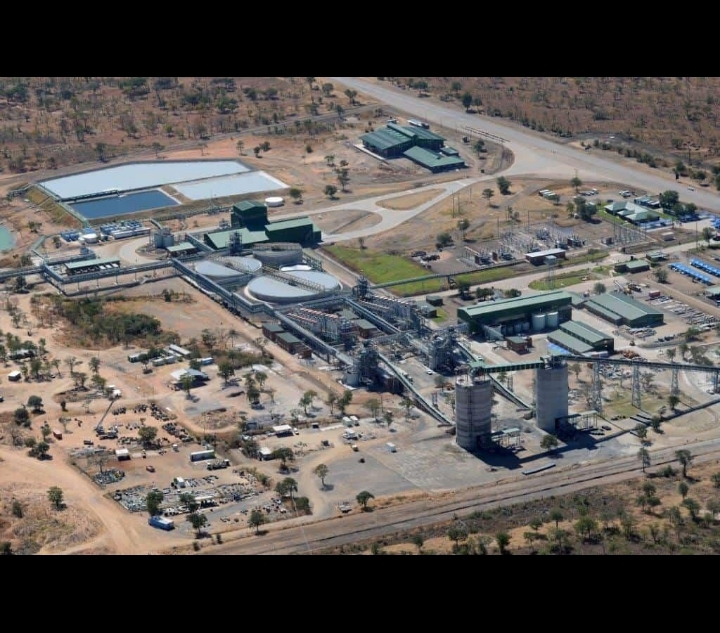
It is the country’s largest platinum producer and part of South Africa-based Implats. Its operations include mines, concentrators and the Selous Metallurgical Complex on Zimbabwe’s Great Dyke.
The company’s economic footprint extends beyond the value of the platinum it produces.
Implats’ 2025 tax transparency reporting shows that Zimplats contributed about R2.048 billion in taxes borne and collected to the Zimbabwean government during the year. Its procurement expenditure was approximately R9.7 billion, with 49% spent locally in Zimbabwe.
This means that the reliability of the payment system affects more than Zimplats’ balance sheet.
If export proceeds are delayed, the company has less working capital available while still needing to pay employees, contractors, suppliers, taxes and other expenses.
The consequences therefore travel through the domestic economy.
The tax relationship is even bigger than the settlement
The US$99 million offset is particularly interesting because it demonstrates how large the fiscal relationship between mining companies and government has become.
Rather than treating export-surrender payments and taxes as completely separate transactions, the arrangement effectively links them.
This may provide short-term relief to both parties.
The government can collect obligations without immediately finding the foreign currency or local-currency cash needed to settle the exporter’s full surrender balance.
The miner receives value from money that might otherwise remain outstanding.
But there is a potential downside.
If bilateral offsets become the normal solution to delayed payments, they can mask the underlying liquidity problem rather than eliminate it.
There is already evidence of tax uncertainty
Zimplats has also experienced disputes over the interpretation of mining taxation.
In January 2026, Zimbabwe’s High Court ruled in favour of Zimplats in a dispute involving historical royalty assessments on mineral-bearing products.
The case concerned the treatment of matte and concentrate during the period from June 2018 to December 2021.
The court ruling did not simply concern one company's tax bill. It highlighted the importance of clarity and predictability in a mining fiscal regime where companies make investment decisions years before projects begin producing returns.
For investors, the issue is not only how much tax is payable.
It is whether the rules governing that tax will remain sufficiently clear and predictable throughout the life of a project.
The real test is what happens next
The immediate pressure on Zimplats appears to have eased.
That is positive.
The company has reported significant progress in resolving delayed government payments, while its local creditors have been brought up to date.
Zimplats is also continuing with major investment projects. Its 35MW solar plant has already been commissioned, while a further 45MW phase is expected to support the company’s energy requirements as Zimbabwe's mining sector continues to deal with electricity constraints.
But the bigger test is whether the underlying payment problem disappears.
If export surrender balances continue accumulating across the mining sector, Zimbabwe could find itself repeatedly negotiating individual arrangements with large exporters.
That creates uncertainty.
It also risks creating different outcomes for different companies depending on their size, negotiating position and relationship with government institutions.
A predictable export-payment system would be preferable to a system that relies on negotiated exceptions after receivables become too large.
Zimbabwe has to solve both sides of the equation
Zimbabwe needs foreign currency.
Its mining sector is one of the country's most important sources of export earnings, making a functioning surrender system important for monetary and economic stability.
But mining companies also need predictable access to the proceeds generated by their exports.
The policy challenge is therefore not simply whether Zimbabwe should retain an export-surrender mechanism.
It is whether the mechanism can operate without turning exporters into involuntary financiers of government liquidity.
The Zimplats arrangement demonstrates that there are ways to resolve the immediate problem.
But offsets are a settlement mechanism, not necessarily a structural solution.
The US$99 million Zimplats offset may have solved an immediate problem. But the more important question for Zimbabwe’s business environment is whether the country can build a system where the problem does not keep returning.