I arrived in Venice on a Tuesday, via Verona, in the kind of rain that does not stop for any of the usual reasons. The lagoon was grey. The vaporetto windows were grey. The fondamenta was grey. My bag, which had survived the road in from Verona by a margin of about ten minutes of plausible weather, was now soaked through. So was I.
I had lunch shortly after arriving with my dear friend Anna Pesonen, who was in the city that day, at a small table in a small restaurant a short walk from the canal. We sat for an hour and a half. Halfway through she broke the news that she has been admitted to the MFA in sculpture at Yale, and is starting in the autumn. I was, and am, incredibly proud of her. We talked about what that next chapter is going to look like, and about the project I was here to begin. When we parted I was, against my better expectations, in a good mood.
Due to the rain, the good mood survived about as long as it took me to walk from the restaurant back to the apartment.
The apartment sat on the second floor of an eighteenth-century palazzo owned by Matilde Dolcetti, the legendary printmaker and educator, who is now ninety years old and could not have been warmer. I was staying with a friend who had flown in for the Biennale from Riyadh, Saudi Arabia. On mornings, on our way out, Matilde would call us into her studio and show us the prints she had made earlier that day. Her studio is beautifully organised but still very much an artist's studio, paper and books to the ceiling, presses in working condition, ink under the fingernails. She has lately set herself a retrospective project: each morning she takes out a small stack of her old prints and binds them into a new book, trying a different bookmaking method each time. It was a delight to walk past her every morning, still joyous, still working out of a home studio she has had for longer than most of us have been alive.
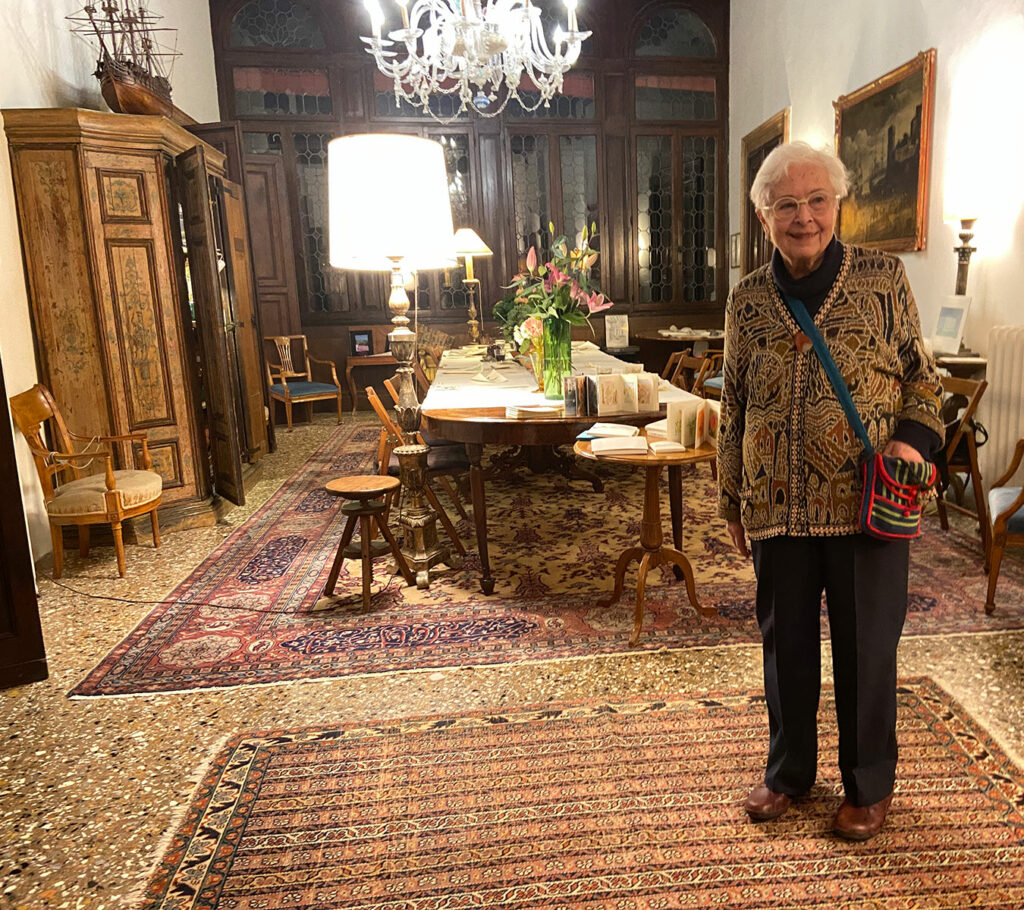
Matilde Dolcetti in her a palazzo.
The apartment itself was beautiful in the particular way these palazzi are beautiful when their owners have lived in them their whole lives: the long, narrow stairwell; the high ceilings; the dark wood; the bedroom windows looking out over a canal that the rain had turned the colour of old pewter. I unpacked. I lay on the bed in that bedroom, in a posture I will describe as defeated.
I do what most of my generation does, when defeated: I doom-scrolled. For once, I will give the algorithm credit. It handed me a small bit of optimism: a fifty-second video by the American painter Henry Taylor, posted earlier that day. Taylor was standing on the deck of a boat in the central lagoon, in the same rain that had defeated me, looking at a city he was clearly enjoying. He was saying, into the camera: isn't it lovely. Isn't it beautiful. Come on. It could be great. Sometimes it's okay.
He captioned it "TODAY, GREY IS OK . Sometimes i dont complain when theres rain. If theres ‘ love ‘ in then air i dont care. Will sleeo in an igloo wid u"
I watched it. Then I watched it again.
By the third viewing I had moved into a sitting position. By the fourth I had put my shoes back on. By the fifth I was walking out into the same rain that had earlier won the argument.
The rain held for the first two or three days. Then, on the morning of the opening, the sky did what Venetian skies do: it cleared, slowly and decisively.

What the rain finally let me see
What you are reading is a letter from a Zimbabwean who flew into Venice last week with a brand to represent and a publication to begin work on, and who instead found that the city, under the cover of one Henry Taylor video and several days of unexpected rain, taught him, briefly, how to look again.
What I saw, when I started looking, was beauty I had not been ready to see.
The decay of the city, first of all. Chipped plaster. The rusted iron mooring rings sunk into the canal walls. The long curling strips of paint lifting off a doorway in Cannaregio to reveal three earlier colours underneath. By Wednesday afternoon I had stopped photographing the obvious palazzi and was photographing door-handles, salt-stained wood, the corner where a building had begun, very slowly, to become a different building.

The walls of the city as I started reading them: not as backdrop but as text.
I have read elsewhere about Venice's slow drowning and I am not going to romanticise that. But I will say plainly: I fell in love with decay last week. Not as a sad fact about a sinking city. As a discipline. The chipped wall is a wall that has lived through the weather. The faded paint is paint that has done its work. The rusted iron has, on its way to ruin, become a colour no one would have been able to mix on a palette. There is style in time. There is grace in attrition.
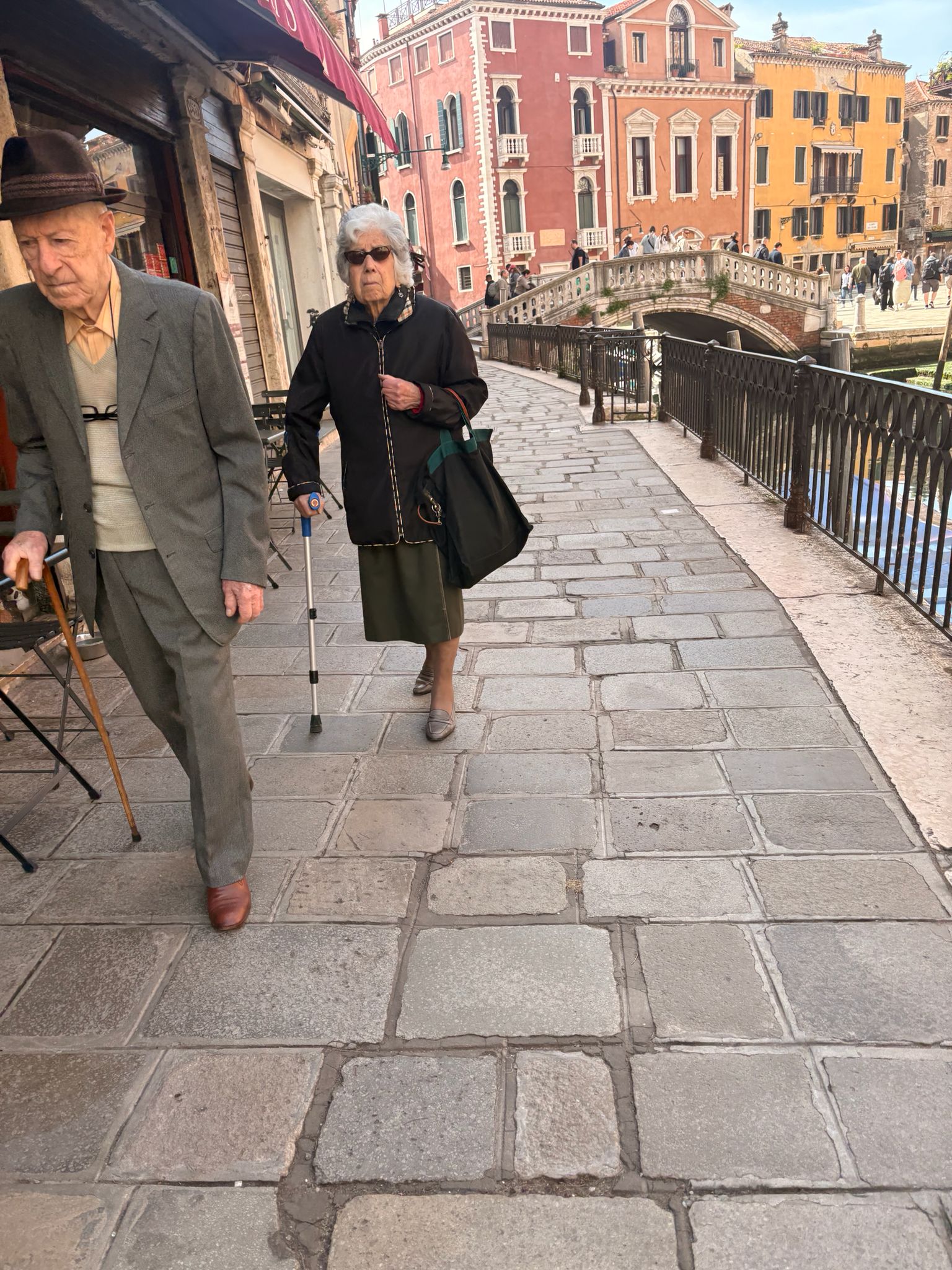
Venice, mid afternoon.
Isn't it lovely. Isn't it beautiful. Come on. It could be great. Sometimes it's okay.
HENRY TAYLOR · ON A BOAT IN THE CENTRAL LAGOON, VENICE, 5 MAY 2026
The constellation in the room
I want to put the names down before I forget any of them. In five years' time I want to be able to remember exactly who was at Santa Maria della Pietà on the night the pavilion opened.
The pavilion was inaugurated on Friday afternoon, doors at 16:30, with an address from Nicholas Moyo, the Permanent Secretary at the Ministry of Sport, Recreation, Arts and Culture, who was guest of honour. He spoke briefly and well. The detail I want to retain from his remarks, because it surprised me, is that the eighth Pavilion of Zimbabwe is being underwritten by Zimbabwean money. The Higherlife Foundation, represented in Venice by Joey Masiyiwa, has supported both the pavilion and the CIMAM conference which runs in November this year. The same foundation, backing both the international meeting of museum directors and the country's own pavilion at the world's most significant contemporary art exhibition.
I will declare an interest here, because to do otherwise would be dishonest. The pavilion lists, on the colophon page of its official catalogue, the institutional supporters of this eighth edition. The Higherlife Foundation is one of them. So is my own brand, 1925 Glen Norah, which is producing, through its publishing imprint and over the course of this year, a documentary publication that follows the journey of the five artists from their studios in to their installation in Venice. To see the 1925 Glen Norah name listed alongside the Higherlife Foundation on the supporters page of the catalogue was, I will admit, the moment of personal pride I had come to Venice expecting and was nevertheless unprepared to feel when it arrived.
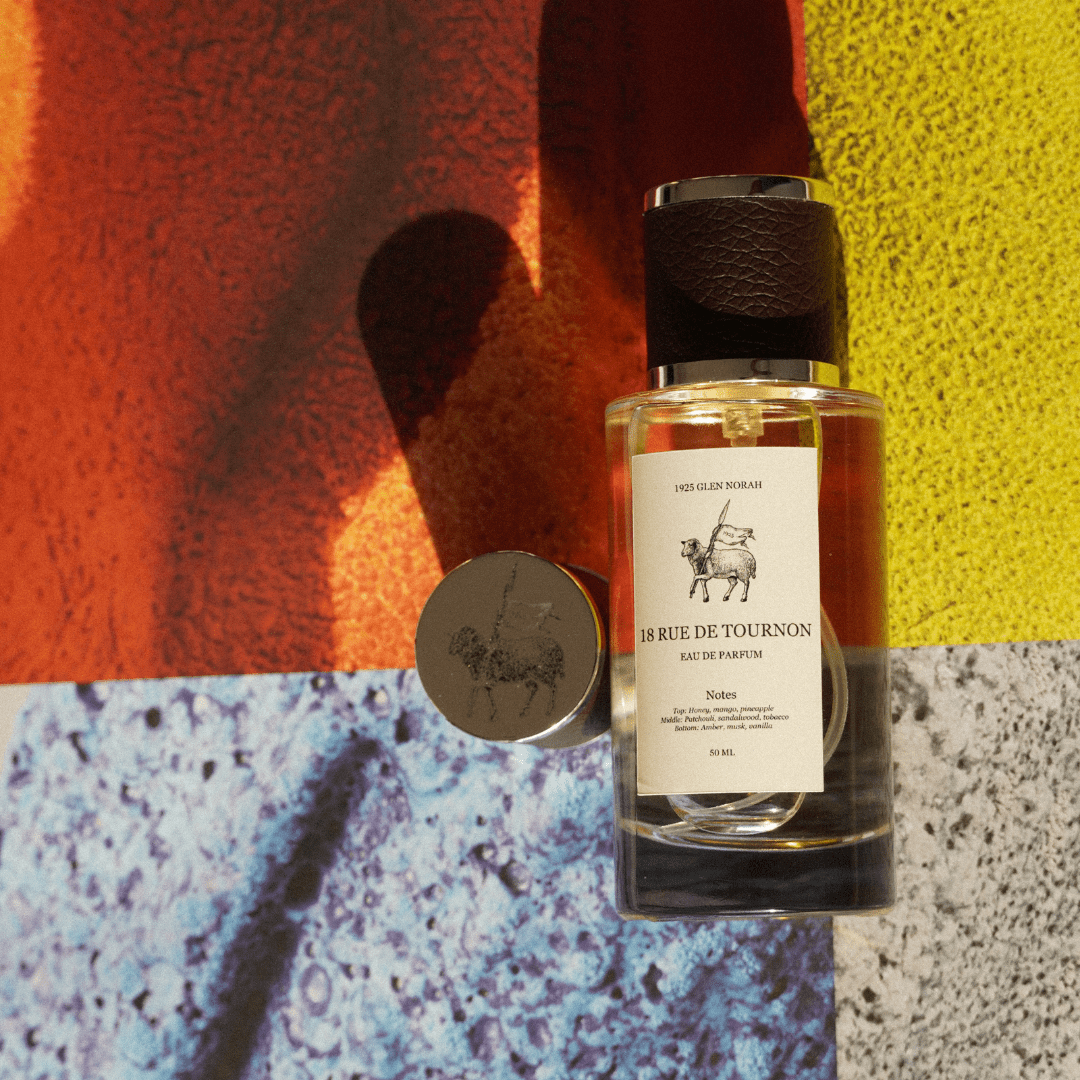
1925 Glen Norah, institutional supporter of the eighth Pavilion of Zimbabwe.
But the night was not about me. It was about the people in the room.
Fadzai Veronica Muchemwa is the curator of this pavilion, and is the first person I want to put on this list. The catalogue makes the case for her curatorial intelligence in its own way. The room makes it differently. Fadzai moved through the vernissage radiant, articulate, and at full volume of warmth, talking to anyone who came up to her, listening to them when they did, returning to her artists at intervals to check they were eating, sitting, breathing. She is one of those curators whose curation is visible in the rooms long before anyone has read a piece of wall text, and whose generosity to the artists in her care is itself the proposition the pavilion is making. What Fadzai has built here is, in some real sense, a new pavilion: one that knows what it is, that does not flatter its audience, and that treats its artists like the colleagues they are.
The five artists themselves were of course the reason the rest of us were there. Felix Shumba, whose six-metre charcoal wall anchors the first room. Franklyn Dzingai, whose photographic and woven work argues for the family album as a place where the memory of a country is, quietly, kept. Gideon Gomo, whose bronzes, Audience of One among them, bring the ancestral vocabulary of Zimbabwean sculpture into a contemporary form. Pardon Mapondera, whose Gone but not forgotten sits at the centre of one of the pavilion's most quietly devastating rooms. And Eva Raath, whose Medusa Menopause and Checkered Memories together make the case that textile is, in 2026, a serious medium for serious work.
Rory Tsapayi was there. Rory, raised in Zimbabwe and educated in the United States, was hand-picked by Koyo Kouoh herself to be part of the curatorial team for the 61st edition. To see them at the pavilion opening, calmly working the room, was to see the next generation of Zimbabwean curatorial intelligence operating at the centre of the Biennale's gravity rather than at its periphery.
Option Dzikamai Nyahunzvi, whose practice, in his own words, reimagines moments of communion between the living and ancestral spirits, came down from Umbria for the weekend. Option is the 2026 Tyburn Foundation Fellow at the Civitella Ranieri artist residency, one of the most respected fellowships an artist working anywhere in Europe can hold this year.
Georgina Maxim was there. Georgina represented Zimbabwe at the 58th Biennale and has work on display at the Arsenale in this edition too, a return to Venice in a different mode. Virginia Chihota was there: legendary, unhurried, the kind of presence a room arranges itself around without quite knowing it has done so. And, this is the part I will not pretend I have professional distance from, Portia Zvavahera was there, who is, in any honest accounting, one of the most important artists working out of Zimbabwe today. She had come to support her husband Gideon Gomo. I could not stop smiling.
Belinda Holden was there. Belinda runs the G.A.S. Foundation, the non-profit artist residency founded by Yinka Shonibare CBE and dedicated to facilitating international artistic exchange between artists, curators and writers from across the African continent and the world. We had been in conversation for some weeks before Venice about her contributing to the 1925 Glen Norah book; we didn't quite settle on the shape of her contribution at the opening, but it is a conversation that is now properly under way.

One of my favourite rooms in the pavilion, with Franklyn Dzingai's photographic work and Gideon Gomo's bronzes in deliberate conversation.

Opening at Santa Maria della Pietà, Friday 15 May 2026, 16:30.
Friends and neighbours
The Rotherhithe contingent had also landed. My neighbours and friends from south-east London, Tsitsi and Panashe, had arrived for the opening that afternoon. Tsitsi and I have been in conversation for some months about a project I am helping her with: a library, in a particular configuration, in a particular place. She had travelled to Venice with a small group of friends from Togo, who arrived in colour and silhouette the rest of us had not thought to attempt.
Alumni
The alumni of previous Pavilions of Zimbabwe were out in force. Wallen Mapondera, brother of the pavilion artist Pardon Mapondera and himself a Zimbabwean Biennale selectee in 2022, was there to support his brother and to write his own next thing into the conversation. Michele Mathison, included in Zimbabwe's 2013 Pavilion Dudziro: Interrogating the Visions of Religious Beliefs, born in Johannesburg but long associated with Zimbabwe, was there in the alumni capacity that the eighth pavilion has now, by virtue of its longevity, begun to require.
The lineage was visible in the room. People who had been the pavilion in 2013, in 2015, in 2019, in 2022 had come back to be the pavilion's audience in 2026.
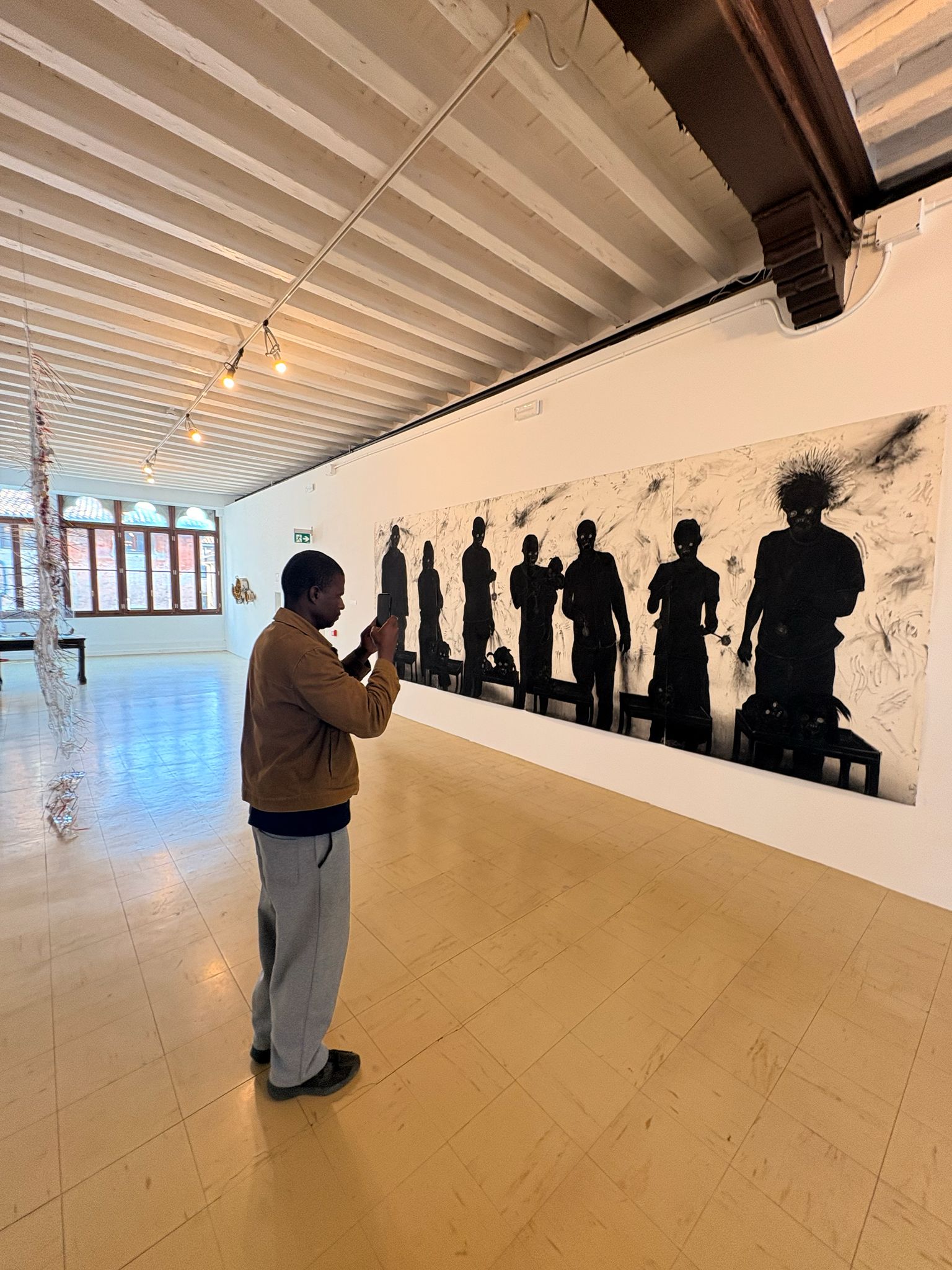
Felix Shumba taking final installation pictures of his six-metre charcoal wall.
The wider Biennale
I saw Gabrielle Goliath's exhibition, which, after the much-reported cancellation of the South African pavilion this year, had come through in its own configuration at another venue: a two-channel video installation, shown inside a Venetian church, drawn from her ongoing Elegy performance projects on South African femicide and the Namibian genocide. The work featured a 2 channel video installation scripted by Dr. Zoé Samudzi.
Cutting across the week in a mode all its own were the interventions of Shumba Maasai, whose day-long procession through the city's campi, conducted under the borrowed authority of a Murehwa chief turned several afternoons of Venetian foot-traffic into something closer to a public ritual.

Eva Raath's Medusa Menopause, 2025, installed at Santa Maria della Pietà.

Gideon Gomo's work installed at Santa Maria della Pietà.
A book I am writing, in part because of the rain
By Saturday evening I was making my way back out, the same route in reverse, the train to Verona and the plane home, with a far better sense of what I was making and why.
The publication, which 1925 Glen Norah is publishing later this year, follows the five artists in the Pavilion of Zimbabwe. It is not a catalogue. It is something closer to a long companion essay, with photography and ephemera, designed to sit alongside the official record rather than to replicate it. The week in Venice taught me what shape the book wants to be. I had arrived thinking I knew. I left understanding I had not yet been listening hard enough.
In closing, on therapy, in beauty
My friend Gazelle Mba, the writer, whose work some of you will know, said something to me earlier this year that I kept coming back to all week. There is therapy in beauty, she said. I think she said it in passing. I think she did not realise it would lodge in my chest as deeply as it did.
What I have to report from Venice is that she is correct.
There is therapy in beauty. Last week, in a city that had at first refused to be anything other than wet and grey and inconvenient, I was given several days of it. The pavilion was beauty. The lagoon walls were beauty, in their long argument with the weather. The friends and the alumni in the room on opening night were beauty. The journey back out toward Verona on Saturday evening, watching the city pull away into the late spring light, was beauty. Taken together, they did what beauty does when you are open to it: they put me back in working order.
Isn't it lovely. Isn't it beautiful. Come on. It could be great. Sometimes it's okay.
Valentine Eluwasi