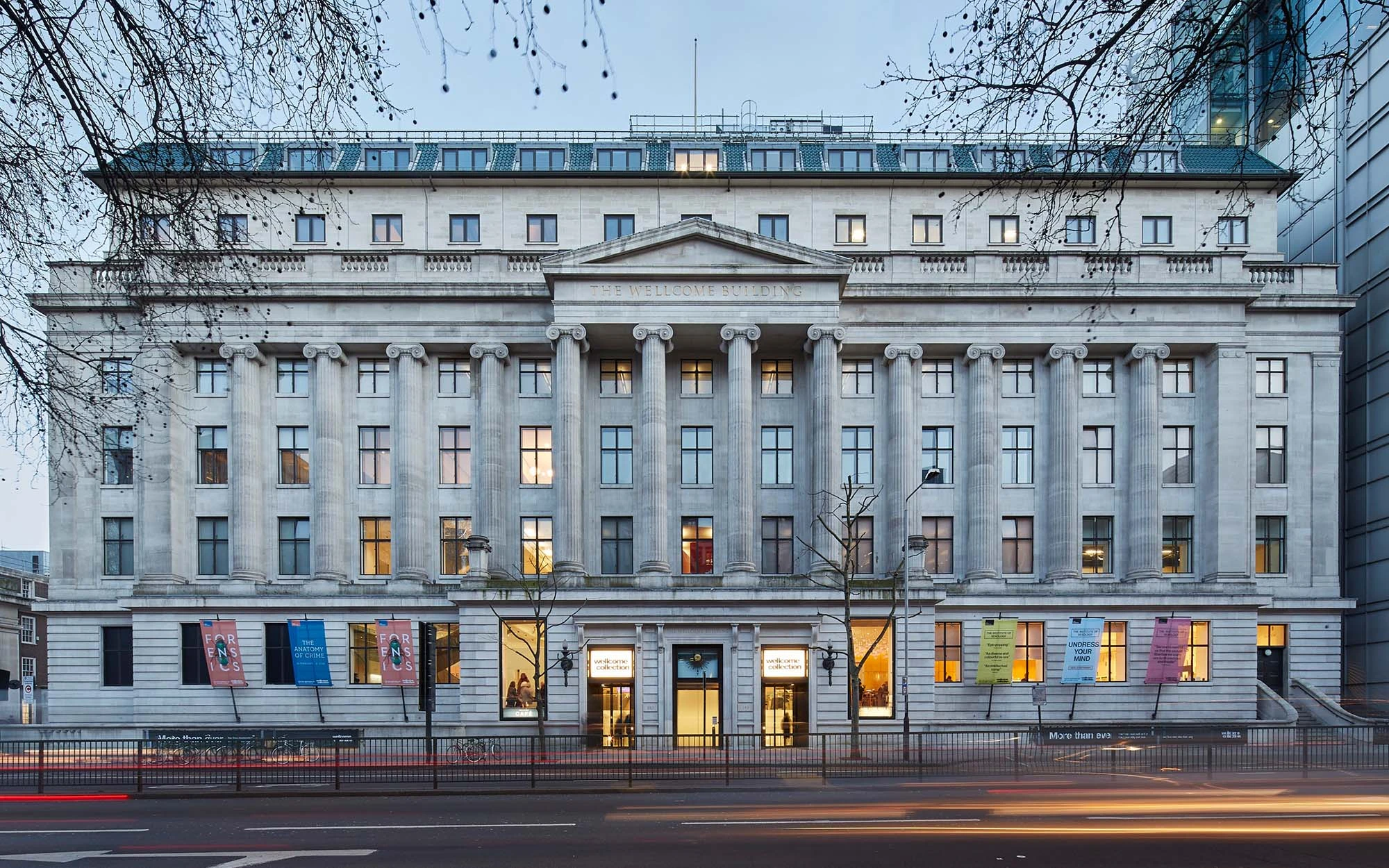
London had finally begun to exhale. After a fortnight of relentless heat, two solid weeks of thirty degrees and climbing that left the whole city wilting, the mercury had eased back to a merciful twenty-five. On any ordinary summer's day that would register as plainly warm; after the heatwave it felt almost cool, cool enough to fully justify Dr Rumbi's long beige trench coat. A British classic, though on a woman who is, in every sense, a Swiss Army knife, or, given the day job, a Swiss surgeon's knife, it took on a distinctly Inspector Gadget quality; I would not have been the least bit surprised to learn the sleeves came with a built-in stethoscope. That word, I should admit, I only learned that afternoon, I had gestured at the cliché thing doctors wear round their necks in photoshoots, and she, ever the educator, supplied "stethoscope" on the spot. We had agreed to meet at the Wellcome Collection on Euston Road, a building I keep returning to even though I have no training in medicine. It sits, quite deliberately, at the intersection of art, science and technology, and there is always something there worth standing still in front of.
It is a fitting place to meet her, because the institution was built on exactly that instinct. It grew out of the private obsession of Sir Henry Wellcome, a pharmacist, entrepreneur and collector who amassed more than a million objects tracing the art and science of healing across every culture and century he could reach. He opened his Historical Medical Museum to medical students in 1913; the neoclassical building on Euston Road was raised to his specifications in the 1930s; and since 2007 it has been a free public museum exploring, in its own words, the connections between medicine, life and art. Behind the galleries sits the larger, quieter engine, a research foundation that has spent the better part of a century funding the science that moves medicine forward. Roughly speaking, what the public sees is a fraction of what the place actually does.
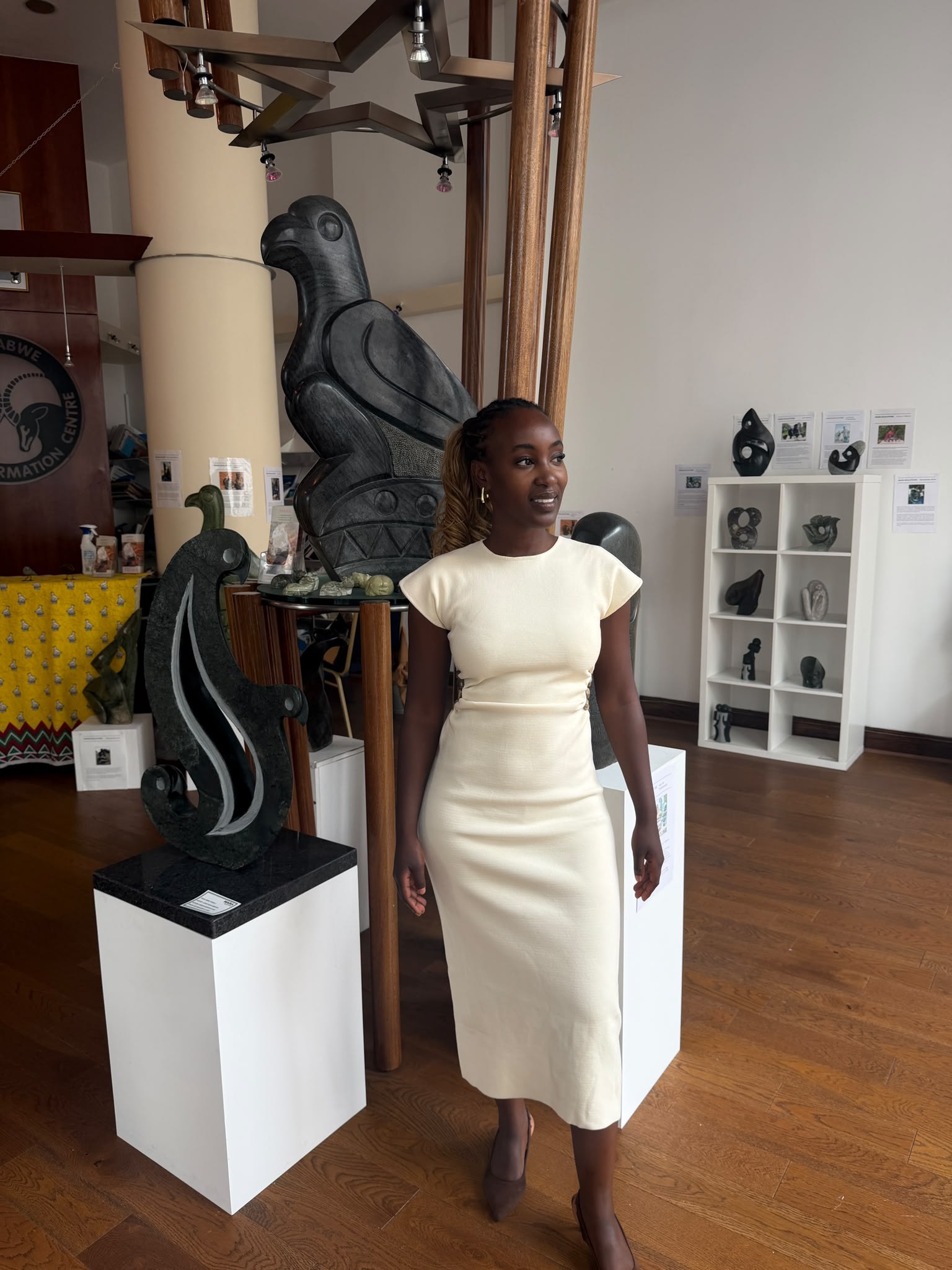
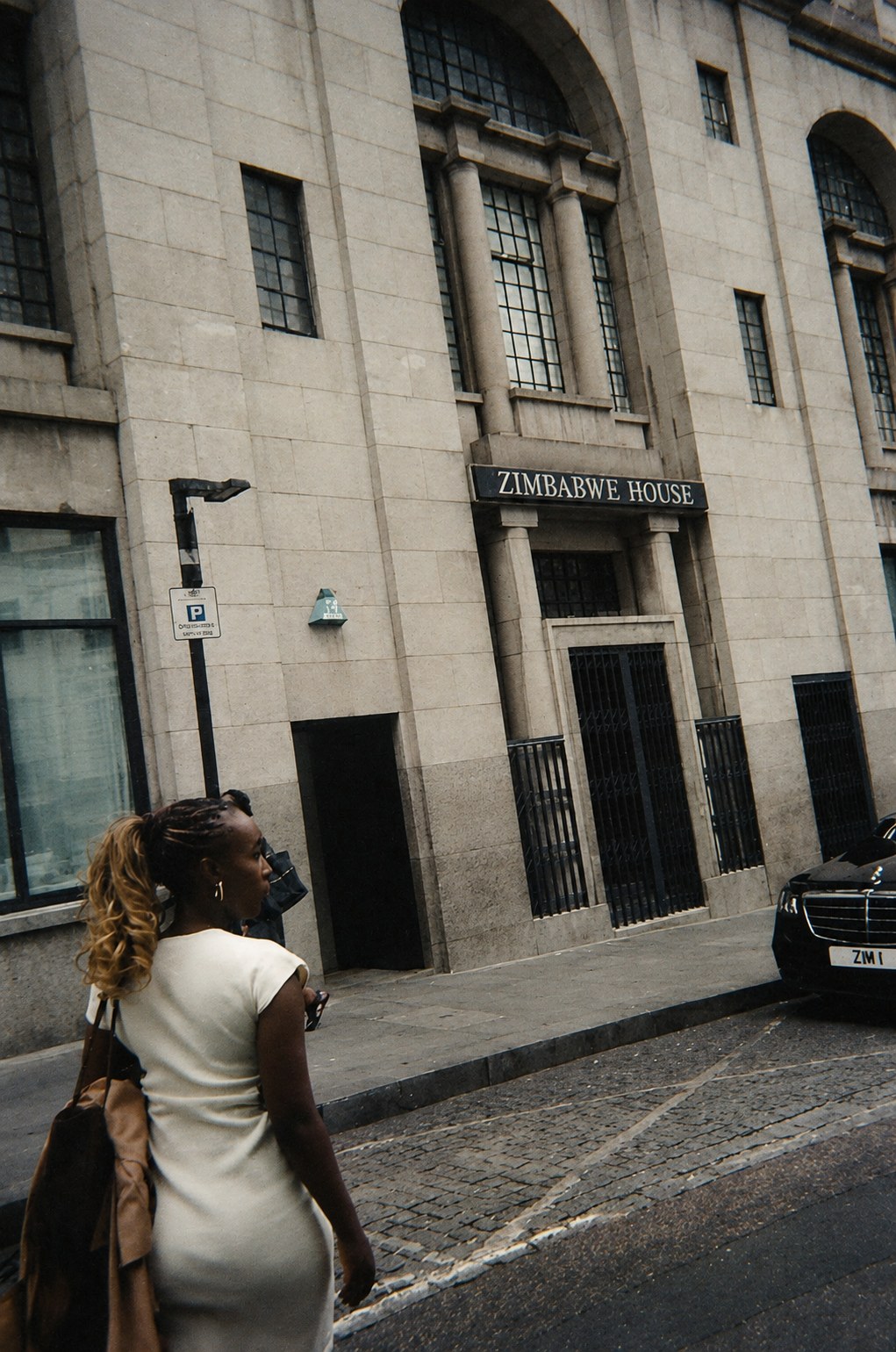
So it seemed only right to meet a woman who seems to carry the same mission in a single body. Dr Rumbi Mutenga is a practising NHS doctor working in general practice, but that title undersells her. She is, above all, an educator and the founder and CEO of Glacie Health, a women's-health venture built to close the gap between good intentions and measurable impact in the care women actually receive. A former midwife who has also served as Chief Strategy Officer at the sexual-and-reproductive-health non-profit Shake Africa, she has spent her career moving between the frontline and the strategy table, convinced that people cannot reach for care they have never been taught to recognise. She had come to London, in part, to do precisely that kind of work: she had been invited by His Excellency Ambassador Katsande to deliver a "Healthcare in the Workplace" session at the Zimbabwean Embassy, at Zimbabwe House, all part of a broader mission to carry innovative, dignified healthcare across her motherland.
She had flown in only days earlier from Toronto, and we settled in the way strangers do, with the small, warm currency of first impressions, both of us agreeing, at some length, on how much we loved Canada. As if summoned by the conversation, a lovely woman appeared at our table looking for a spare seat, carrying an unmistakable Canadian accent. We laughed at the coincidence and made room. It was that kind of afternoon.
And then the conversation simply overflowed. It ran up through the floors of the building, past an exhibition on HIV, through the reading room, in front of eighteenth-century anatomical drawings and a case of hopelessly dated dental instruments, and it did not really stop until we had walked out of the doors and on towards the Zimbabwean embassy itself. I could not help reading the walk as a small metaphor for everything she is trying to do: to take the knowledge held inside the Western healthcare ecosystem, gather it up, and carry it home, to teach with it, to educate with it, to impart that wisdom to our own people. The interview that follows has been condensed and lightly edited.
A calling, never a doubt
When was your first entry point into medicine? At what age did being a doctor cross your mind as something you could actually do?
Honestly? My whole life. For as long as I can remember, I have known I was going to be a doctor. People talk about a calling, that is the only word I have for it. There was never a moment of doubt, never a competing option I seriously entertained.
Was that something around you, in the family?
In a way. My mum's younger sister is a doctor, my dad's younger brother is a doctor. But I don't think they influenced me, not consciously. I was the first girl, the first female cousin in my family, so I was very maternalised, very much cast in the role of the one who helps. Somehow that didn't turn into wanting to be a nurse or a teacher, which would have been the obvious versions. It turned into wanting to be a doctor. I can't fully explain it, but I think the helping was part of it.
"Patching people up"
Now that you're here, is it what you thought it would be? A friend of mine has been a doctor in Australia for years and she's exhausted, a bit of a career crisis. How do you feel?
I'm really happy, genuinely. But it wasn't a straight line. I didn't get into medicine the first time I applied, so I studied midwifery and became a midwife first, then qualified as a doctor afterwards, and even in that detour, being a doctor was never in question. The hard part came later. My first years as a doctor started during Covid, which meant social isolation on top of everything else, a perfect recipe for dissatisfaction. Sometimes, because of the resource limitations, the quality of care you want to give simply isn't possible, and that eats at you. For a while it felt like I was just patching people up on a conveyor belt.
What changed?
I took a year out, and it was the best thing I ever did. Your friend went to look for greener pastures; I stepped off to see what life looked like outside all of this. I grew back into myself, and I came back thinking, actually, it's not that bad. As a GP I get to do the part I love: people. I love talking to people, I love listening to their stories. Someone comes to me with a problem, and I might never solve it, but I do my best, and most days I get to meet lovely people and have a lovely day. It's almost the perfect job for me.
Education is the medicine
From what I understand about you, education sits at the centre of everything. Is that the mission with Glacie Health?
One hundred per cent. If we don't have education about certain things, we can't access the healthcare at all. If I don't know I'm meant to check my breasts, how would I ever know I had a lump? People still think contraception protects them from sexually transmitted infections. Education closes those gaps. And it looks different depending on where you are and who you're speaking to, knowing how to frame something for the person in front of you is a skill in itself, one I'm still getting better at.
How does that translate into the actual company, is education a service, a programme, something else?
We're already doing it. One of our clients is a consumer brand, BeYou, which makes period-related products. We made sure that everything we do for them is rooted in women's health education, what painful periods are, what they might mean. Their social media used to be about the product; now it's about education, and the product is secondary. If you teach me something, if you equip me, I'll remember that your brand served a bigger purpose. We're also working to reactivate the Sally Mugabe Fertility Clinic in Harare, and again there's an education campaign built into it: infertility is not a woman's problem. It affects the whole family, men and women. What does it look like in men? What does it look like in women? We're breaking those assumptions down. It matters to me that when we win these contracts, it's never just the medical piece, we embed the education in. We sprinkle it in on purpose.

The clinic reads like a proof of concept for everything else in this conversation. Reactivated at Sally Mugabe Central Hospital in Harare, and initiated by nurse-midwife Tinotenda Manyere, now an IVF specialist nurse, the public fertility clinic offers low-cost, science-based evaluation: ovulation tracking and induction, transvaginal scans and other locally available diagnostics, for women who might otherwise spend years and thousands of dollars on prophets and traditional healers.
A July 2026 report in The Herald followed women like Fadzai Kamuti, who conceived after a thirteen-year ordeal once doctors finally diagnosed and treated her polycystic ovary syndrome. Clinicians there press the same point Glacie builds into its campaigns, that infertility is not a woman's problem alone; in roughly half of couples the man is a factor. The hospital's stated ambition is Zimbabwe's first fully equipped fertility clinic, supported through diaspora skills-transfer and exchange programmes. Glacie Health is backing the reactivation and has called on partners with fertility resources to help.
A child of the soil
For work like yours to land, you have to understand the culture. Aid and medical programmes from the West have often failed in Africa precisely because they didn't. Do you feel your perspective, growing up between here and there, lets you do that more effectively?
Definitely, and I feel very lucky. My formative years were largely in the UK, so there's culture I've had to relearn, things I'm "supposed" to know and don't always. But the willingness is there. I keep asking: why should my community get less equitable care simply because of where they are? Why is it that because I'm in the UK I can access certain things and know certain things, and they can't? We live in a world with the internet. So much of this used to be locked behind money and resources, and it isn't any more. I can bring high-quality care pathways home to my people, because we can, you just need the incentive, the connection to a place, the moral reason to do it. Without that, people simply don't.
Where I feel it most is in other people's families rather than my own. I was a bridesmaid at a friend's wedding and I did something, stood, or spoke, at the wrong moment, and someone quietly pulled me aside to tell me that's not how it's done. You're trying to be respectful and you can still be read the wrong way. But you're always a child of the soil. That part doesn't go anywhere, even when you get it wrong.
"It's your competitive advantage"
So much of the medical sector back home is thinking about how to leave. How do we change that?
By being honest that the grass isn't greener, it's just different grass. One of the people I'm proudest of is my aunt, Professor Faith Muchemwa. She trained in Zimbabwe, spent time in Japan, did fellowships in Toronto and in the UK, became genuinely world-class, and then took her practice back to Zimbabwe. That's the thing more of us need to tap into. When you've trained here and you go back, there is an advantage waiting for you. It is, quite literally, your competitive advantage, and it's a win for you, for the country, and for the industries you want to serve. Nobody loses if it brings investment and expertise home. I'm starting to have this conversation more and more with my own circle. It used to be "maybe let's move to Cape Town." Now people are actually dipping a toe back into Zimbabwe. I want to spend a real stretch of my adult life living there.
Five times more
You were part of an expert panel on Black women's experiences in childbirth. What did that surface?
The figure that brought it to prominence around 2020 was that Black women are around five times more likely to die during childbirth, and in the year after, than their white counterparts. I was lucky enough to sit on a panel that produced a report on Black women's experiences of birth, and some of it is just, oh my God. What's difficult is holding both sides at once. You hear these experiences, and then you go to work and you see that nobody is coming in to harm anyone; everyone is doing their best. So how do you explain a gap that stark between what people live and what the people caring for them intend? And it isn't only Black women, the negative outcomes cut across Asian women, mixed-heritage women, women everywhere. We're hearing the stories from Nottingham and elsewhere. It's all women.
Where does the assumption come from, the unconscious bias that Black women have a higher pain threshold?
A lot of it is the history of gynaecology itself. Some of the instruments we still use, certain speculums, for instance, were developed on Black women in America who were not anaesthetised. They were tested and refined on those women, in inhumane ways, and the men who did it were considered the forefathers of the field. This isn't ancient history: we're talking about the 1800s. My grandmother met someone who was born in that century. Those men wrote the textbooks. Their thoughts, their biases, they filtered down into the next generation of clinicians, and the next, and maybe even the one after that. We may be losing it now, but it was baked in at the foundations.
One-to-one, and at scale
Your work seems to live on two levels at once, the one-to-one and the enormous. How do you think about that?
As a GP, I'm hopefully making a difference one to one, with each patient I see. It's intimate work and I love it. But I'm also putting the frameworks in place to make a difference at scale through Glacie. Take the Sally Mugabe Fertility Clinic, if we do what we say we're going to do, the impact is huge. Then multiply that by however many other projects we take on. The ripple effect is bigger than you can even picture: the staff it touches, and then everything they go on to do in their own communities. One-to-one keeps me human. Scale is how the work actually reaches people.
Would you ever go private, a Harley Street practice, say?
I have no desire to practise private medicine, particularly not in the UK. The difference is really access and speed, not quality of care. Sometimes private care even harms you, too many tests, too many scans, radiation you didn't need, because there's a commercial incentive to keep offering them. And honestly, if money were my goal, being a private doctor isn't the way to it. I'd be better off owning NHS GP surgeries. Private practice isn't the answer to either of the things people assume it is.
Ten years from now
Picture yourself in ten years. Are you still a GP?
I'm a vision-board person, I like to plan and imagine what my life could look like. In ten years I want a life with purpose, with flexibility, and with financial reward attached to it. As an NHS doctor there are real limits on that flexibility. When my uncle passed away, I let work know I was flying to Zimbabwe the following evening and they asked me if I could do the morning clinic. That was a real turning point for me. So: still working hard, because I'd feel unfulfilled if I weren't, but flexible with my time, and financially free enough to choose.
The final walk
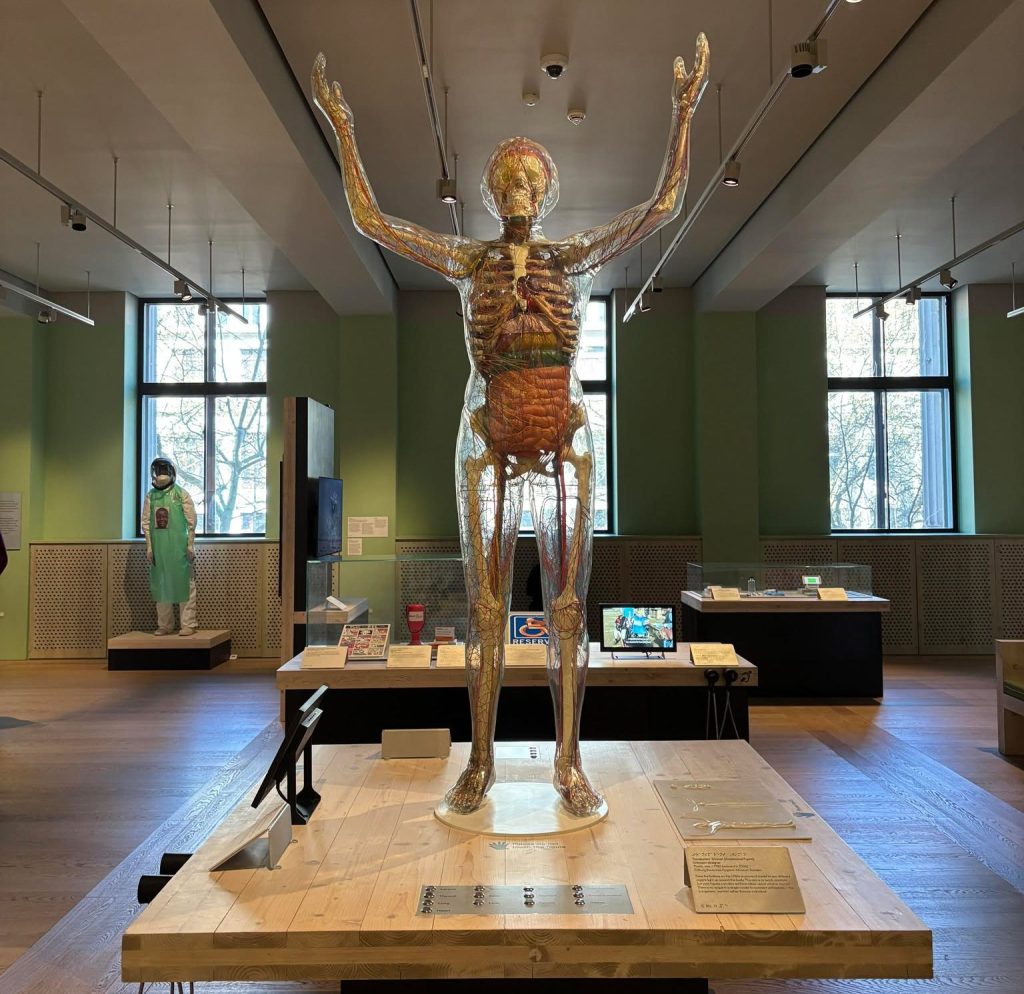
By this point we had drifted up to the anatomical models, and Dr Rumbi, explained how despite having been trained at university using donated cadavers (another new word I learnt), mortality was still somewhat a challenging thought. "It reminded me how fragile we are," she said of that first dissection. "We walk around full of life, but ultimately we're protein and some cells." I asked whether mortality frightened her. "It's a reminder of my humanity," she said, "and it makes nothing feel like too big a risk. A bit of embarrassment, a failure, who cares? We're all going to die anyway. Take the risk." I tested her on the organ models like a couple of overgrown students, she got eleven of twelve, misidentifying only the cecum, and was quietly, competitive about it. Then we stepped back out into the afternoon and walked towards the embassy. It struck me, again, that this is the whole point of someone like her: to go and gather what can be learned here, and to carry it, patiently, back to the soil that made her.

Founded and led by Dr Rumbi Mutenga, Glacie Health is a women's-health venture with a single organising idea: closing the gap between intention and measurable impact, so that products and care are designed around women's real needs rather than assumed for them.
Its work runs through advocacy, collaboration and consultation, pairing innovation with rigorous evaluation to build practical, scalable solutions. Recent projects include a Women's Health Hackathon run with Leicester University's Medical African Caribbean Society and the Black Girls Collective, community "Walk and Talk" events, and published reports on endometriosis, fibroids and the future of period care. The team is a collective of NHS doctors and advocates.
"Glacie Health was founded from a deep need to close the gap in the support that women receive across health and wellbeing. We exist to challenge that status quo."
Dr Rumbi Mutenga, Founder & CEO