
Zimbabwe's newest stock exchange has just landed its first institutional backer. On 10 June 2026 the Zimbabwe Stock Exchange signed a memorandum of understanding with INVESCI Asset Management, the firm voted the best asset manager at the 2025 Capital Markets Awards, naming it a strategic institutional partner for the Zimbabwe Entrepreneurship Exchange, or ZEEX. For a market that won regulatory approval only days earlier, securing a serious anchor investor this fast is the most encouraging signal it could have sent.
ZEEX itself was cleared by the Securities and Exchange Commission of Zimbabwe on 5 June, a dedicated market for small and medium enterprises and the first structural addition to the country's market architecture since the Victoria Falls Stock Exchange opened in 2020. It deserves applause. The ZSE has looked at the part of the economy the formal market has always ignored, the small and growing businesses that do most of the country's hiring, and decided to build something for them. That instinct is correct, and it is overdue. The honest job of this piece is to celebrate the move, and the early momentum now behind it, while being clear-eyed about what still has to go right.
What ZEEX actually is
ZEEX will run two segments. ZEEX Private Markets is to facilitate capital raising through structured private placements, a regulated route for businesses seeking pre-public investment. ZEEX Public Markets is to handle listings, capital raising and secondary trading for emerging companies wanting a public market. In effect, the ZSE is building a pipeline: raise privately on ZEEX, graduate to a public ZEEX listing, and in time, if the company scales, move to the main board or to the VFEX.
That gives the exchange a three-tier shape. ZEEX for early-stage capital formation, the Zimbabwe-dollar main board for established local companies, and the US-dollar VFEX for businesses whose revenues and assets are priced in hard currency. As a design, it is coherent.
It is also broader than equities. In the partners' own description, ZEEX is a single integrated venue for primary-market fundraising, asset tokenisation and secondary trading, bringing SMEs, invoice-discounting instruments and tokens into one regulated ecosystem. The tokenisation ambition is a notable tell of how digital the ZSE intends this platform to be, and a sign it is reaching beyond a conventional share market.
The gap it genuinely fills
The case for ZEEX is real and well documented. Estimates put Zimbabwe's informal economy at 60 to 70 percent of GDP, and small businesses, not the listed corporates, are the country's main engine of employment. Yet the formal capital market has never been built for them. Listing costs, compliance calibrated to large companies, and disclosure rules that exceed what a firm of 10 to 50 staff can administer have kept viable businesses outside the system for the ZSE's entire history. Group CEO Justin Bgoni framed the platform as a response to exactly those "structural barriers, prohibitive costs, and constrained access to traditional financing."
There is a development angle that sharpens the point. The African Development Bank's Africa Industrialisation Index 2025 found that manufacturing employment in Zimbabwe fell from 5.2 percent to 4.7 percent of total employment between 2010 and 2024, even as manufacturing value added grew 13.6 percent a year. That gap is the signature of an industrial base built on capital-intensive commodity processing that does not create many jobs. The activity that does, diversified manufacturing, agro-processing, logistics, technology, is precisely what sits in the SME sector. A market that channels capital there would address the AfDB critique at its root. That is the prize.
Credit is due for the ambition. Building a market for the emerging and informal economy is harder, less glamorous and less immediately lucrative than courting another blue-chip listing, and the ZSE has chosen to do it anyway. As a statement of where the exchange believes its future lies, with the entrepreneurs rather than only the incumbents, ZEEX is the most forward-looking thing the bourse has done in years, and the right people should be commended for getting it this far. Nor does it stand alone: weeks before the ZEEX approval the ZSE issued a tender for an invoice-discounting platform to help small suppliers raise working capital, a sign that this is a deliberate SME-finance strategy rather than a one-off.
What ZEEX cannot fix on its own
None of that applause means the job is finished, and it is worth being honest about one thing ZEEX is not designed to touch. Read the timing. ZEEX is being launched in the same quarter that First Mutual Properties shareholders voted unanimously to delist from the main board, that TSL Limited committed to migrating to the VFEX, and that Nampak Zimbabwe's South African parent kept disclosing its Zimbabwe stake as an asset held for sale. Econet Wireless, Proplastics and First Mutual Holdings have all raised undervaluation concerns. The main board is losing its most commercially significant, US-dollar-earning companies, and it is now a trend rather than a run of coincidences.
The cause of that exodus is not a missing SME segment. It is the Zimbabwe-dollar pricing mechanism applied to a board whose biggest names earn in US dollars and hold US-dollar assets, compounded by a cost and tax gap with the VFEX. As Equity Axis has noted in its analysis of the move, main board trading costs of around 4.15 percent sit well above the VFEX's 2.32 percent, and the capital gains treatment differs too. ZEEX changes none of this. It does not touch the main board's currency regime, its trading costs, or its tax differential. And any SME that succeeds on ZEEX and grows into a serious US-dollar earner will, in time, run straight into the same wall that TSL and First Mutual Properties are now climbing over.
So ZEEX should be judged for what it is, and what it is is valuable: a fix for the bottom of the market. That it does not also plug the leak at the top is not a failing of ZEEX. It is a separate problem, for a separate reform, and it takes nothing away from what this one gets right. Fixing the bottom of the market is worth doing on its own terms.
The currency in the room
The sharpest pushback online goes a level deeper than market design. The analyst who posts as @bla_bidza argued that the binding constraint is macroeconomic, that every market is a sub-entity of the money market, and that until the currency question is settled a new exchange changes little.
@bla_bidza · 9 June
The elephant in the room is the bloody currency buddy. The root of any country's market system is at the macro-level (money supply and demand aggregates). Any other markets are sub-entities of that market. As long as Zimbabwe is dollarised and locals can import same cheaper contraband elsewhere or you cannot make out the cashflow planning 10 years from now; hazvishande.
"Hazvishande" is Shona for "it will not work." He turned the same lens on the VFEX, calling it "an asylum sanctuary stuffed with REITs," a place where investors park money in property for capital preservation rather than to earn a return.
That charge drew a rebuttal worth airing, because it captures the other side of the case.
@siyapakanaka · 9 June
REITs are investing in real estate, energizing the construction sector- creating jobs. By nature they have aggressive dividend policies so deliver returns to shareholders. My spouse was boasting she recently bought into Pfuma few months back & recently received a dividend.
A third voice put the blame squarely on monetary policy, and on the trust it has cost.
@Changunda1 · 9 June
The root problem is a Monetary Policy that consistently eroded savings, whilst rewarding borrowers & speculators with all sorts of poorly thought out incentives that eventually eroded trust & drove the general public away from using banks.
The critics are pointing at something ZEEX, by itself, cannot reach. An SME exchange is downstream of the currency and trust question, not upstream of it. If savers do not believe the Zimbabwe dollar will hold its value over the life of an investment, no amount of streamlined listing rules will on its own conjure the patient local capital that a young company needs. That does not make ZEEX pointless, and it is not a reason to wait. Building the plumbing now is the smart move, not a wasted one. Zimbabwe has had stretches of currency stability before, and the day confidence returns, the market that channels it to small businesses will already be standing and ready. Far better to have it built and waiting than to start from nothing once the moment arrives.
A cautionary tale from Nairobi
Approval and a purpose-built platform are necessary, but the region's history shows they are not sufficient. The Nairobi Securities Exchange launched its Growth Enterprise Market Segment, GEMS, in January 2013, with Home Afrika listing as its first company that July. The rules were deliberately light: a company needed as little as one year of operation and did not have to be profitable to list. Years on, uptake stayed thin enough to draw concern from Kenya's National Treasury.
The lesson GEMS taught the continent is blunt. The binding constraint on an SME exchange is rarely the listing rulebook. It is the investor base, a pool of capital with both the appetite for early-stage equity and the depth to keep a secondary market trading. Without that, a simplified market is a well-built room that no one enters.
The first answer to the investor-base question
This is why the partnership that leads this piece matters far more than a routine memorandum. Recall the lesson from Nairobi: an SME exchange lives or dies on its investor base, and GEMS withered for want of one. INVESCI is precisely the kind of institutional anchor GEMS never had, and ZEEX has secured it before launch rather than after.
The substance is still early. Under the memorandum the two sides will cooperate on evaluating investment opportunities on ZEEX, advise on platform design and listing standards, sit on advisory committees and stakeholder forums, jointly lobby for SME-friendly regulation, and share market intelligence. Group CEO Justin Bgoni framed it as proof that institutional investors recognise the platform's potential, bringing structured capital and institutional rigour into the SME space. INVESCI's managing director, Thomas Chataika, called it a win-win with an open-cards approach for both sides, and pointed to the ZSE's pedigree, an exchange in operation since 1894, as the foundation of the trust the venture needs.
A memorandum of understanding is intent, not committed capital, and it should be read as such. But on the single question that decides whether an SME exchange lives or dies, the investor base, the ZSE has moved first and moved well. It has the right anchor partner in the room before launch rather than after it, which is a markedly better starting position than most of the cautionary precedents enjoyed.

Thomas Chataika, CFA, CA(Z), CA(SA), is the founder of INVESCI Asset Management, with a long record managing portfolios for retirement funds and high-net-worth individuals. He began his career as an auditor at Ernst & Young in Harare, where he trained and qualified as a chartered accountant.
He went on to Datvest Asset Management as an analyst and portfolio manager, rising to chief investment officer in 2004, before moving to Johannesburg in 2006 as a senior portfolio manager at BoE Private Clients. He returned home to set up INVESCI in 2011; the firm is active in listed equities, property and private equity.
A CFA charterholder and a member of both the Zimbabwean and South African institutes of chartered accountants, Chataika also spent time at the Swiss Finance Institute in Lausanne, where he earned a postgraduate diploma in financial engineering and asset management. It is exactly this kind of institutional pedigree that an SME market needs on the buy side, and that ZEEX has now drawn in before it has even launched.
The most encouraging detail: the man building it has done this before
The most encouraging detail in this announcement is not in the press release at all. It is who is building ZEEX, and what he has already lived through, because the person designing Zimbabwe's SME exchange has watched one of these markets up close before.
Justin Bgoni is a chartered accountant with more than two decades of international experience. Before returning to Zimbabwe he was Chief Financial Officer of the New Zealand Stock Exchange, after a spell as a management consultant at McKinsey. On paper, he is precisely the operator this project needs. In practice, he is something rarer: a chief executive who has already sat inside an exchange that ran a junior market for small companies, and watched it struggle.
That market was the NZAX. In the years after the 2008 financial crisis it did not expand but shrink. NZX operating reports from the period show the NZAX's total market capitalisation falling by around 35 percent by the middle of 2010. Liquidity all but vanished: the entire market recorded roughly 890 trades worth about NZ$5 million in the first half of 2010, against a main board turning over billions. By the end of that year the number of listed companies had thinned to about 25, and NZX would later wind the market down.
Read the right way, that is encouraging, not discouraging. The failure mode that kills SME exchanges, too few issuers and no liquidity, is not a theory to Bgoni. He has seen it happen, from the inside, with the full reporting in front of him. The issues this analysis has raised, the ZWG liquidity squeeze, the investor base, the technology, are precisely the ones a CFO who lived through the NZAX would expect, and know to design around.
None of this is a guarantee, and the NZAX is a reminder of that too: even a capable exchange with an experienced finance chief could not save that market once the fundamentals around it turned. Experience tells you where the traps are; it does not on its own hand you the tools to avoid them, and the proof will be in the operating detail ZEEX has yet to publish. But on the narrow and important question of whether the right person is holding the brief, the answer is reassuringly clear. Zimbabwe could do a great deal worse than to hand this task to someone who has already studied, at first hand, how it can go wrong.
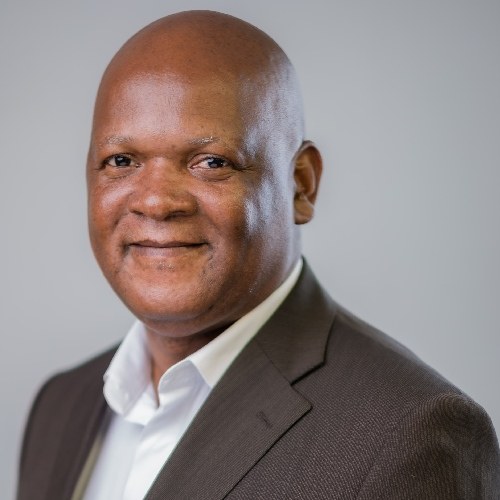
Justin Bgoni is a Chartered Accountant with over 24 years of international experience in the financial and public sectors. He holds a Bachelor of Accounting Science from the University of South Africa and a Master in Applied Finance from Victoria University of Wellington in New Zealand.
His notable previous appointments include Management Consultant at McKinsey and Chief Financial Officer at the New Zealand Stock Exchange. He currently chairs the Capital Markets Association of Zimbabwe and sits on the boards of the Investment Protection Fund and the National Venture Capital Company of Zimbabwe.
It is the New Zealand chapter that matters most here. A CFO does not watch a growth market shrink without learning, in detail, why. That is rare institutional memory to bring to ZEEX. It is a reason for cautious optimism about the leadership, not a guarantee about the market, which will stand or fall on operating detail that has not yet been announced.
The Zimbabwe-dollar squeeze
Zimbabwe faces that constraint in a particularly tight form. The Reserve Bank's 35 percent policy rate and deliberately restrictive Zimbabwe-dollar liquidity are doing their job on the exchange rate, but they also shrink the pool of local-currency savings available to chase new instruments. ZEEX securities would trade in Zimbabwe dollars, bought by investors holding Zimbabwe dollars, inside a monetary stance designed to keep those dollars scarce. The same policy that underwrites currency stability works against the liquidity an active SME market needs. That tension is not fatal, but it has to be designed for, in how the platform structures minimum investments, targets investors, and arranges market-making.
The real test is the technology
Bgoni called ZEEX a "cutting-edge, entrepreneurship-focused platform" that "harnesses high technology." That phrase is where the outcome will actually be decided. A scaled-down copy of the main board, with lower fees but the same legacy plumbing, will not work, because the barriers facing SMEs are not only about fees and forms. They are about whether an investor in Bulawayo or Mutare can buy a ZEEX-listed security from a phone, with settlement they can trust, without a Harare broker and a paper share certificate.
The benchmark is digital-native. If ZEEX ships with mobile-money integration through EcoCash and OneMoney, settlement at T+2 or better with electronic records, simplified digital disclosure, and investor onboarding that does not require a full stockbroking relationship, it can reach a participation base the institutional main board never has. If it does not, it will draw neither the companies nor the investors its mandate depends on.
We have examined that question in detail, including the ZSE's decade-long technology track record and what a modern growth-market stack should look like, in a companion piece: The Tech Stack Will Decide ZEEX. The ZSE Has Been Quietly Building Toward It.
What to watch at launch
The applause comes with a fair caveat, and it is one the ZSE itself would not dispute. What has been secured is regulatory approval, the green light to build, rather than a market already running. There is not yet a published launch date, listing fee schedule, disclosure rulebook, investor-eligibility framework or named inaugural issuer. That is normal for this stage, and the detail that will turn the approval into a working market is still to come. When it lands, five specifics will matter most:
- The listing cost structure, and how it compares with regional SME exchanges.
- The minimum disclosure requirements, and whether they fit SME administrative capacity.
- The investor qualification framework, and whether it admits retail participation through digital channels.
- The market-making or liquidity arrangements for ZEEX Public Markets securities.
- The pipeline of companies lined up as inaugural listings.
For now, the verdict is a hopeful one, and deservedly so. The ZSE has identified the right problem, designed a sensible two-segment response, secured the approval to build it, and put it in the hands of a chief executive who has seen this kind of market up close before. Taken together, that is the most encouraging move in Zimbabwe's capital markets since the VFEX, and it is the kind of forward-looking, inclusion-minded reform the country needs more of. It should be applauded.
The caveats are worth stating plainly, because honest support is more useful than cheerleading. ZEEX does not fix the main board's exodus, the currency and liquidity questions are real, and the operational detail that will decide everything is still to be published. But these are the ordinary challenges of building something new, not reasons to doubt the direction of travel. This is a step in the right direction, taken by the right people, for the right reason. We are optimistic it can work, we will give credit where it is plainly due, and we will be watching the detail closely so that it does.
Sources: Zimbabwe Stock Exchange press release, "ZSE receives regulatory approval to launch the Zimbabwe Entrepreneurship Exchange (ZEEX)," 5 June 2026, and the quoted remarks of Group CEO Justin Bgoni therein (zse.co.zw); structural analysis of the main board's USD-company departures and the ZSE/VFEX cost comparison drawing on reporting by Equity Axis; African Development Bank, Africa Industrialisation Index 2025; the ZSE's published biography of Justin Bgoni (former CFO, New Zealand Stock Exchange); NZX operating reports on the NZAX growth market (2009 to 2010); Bgoni portrait courtesy of the African Securities Exchanges Association; Nairobi Securities Exchange GEMS launch record (2013); coverage in NewsDay Zimbabwe; the ZSE and INVESCI Asset Management joint press announcement on the ZEEX strategic institutional partnership and its quoted remarks of Justin Bgoni and Thomas Chataika, 10 June 2026; and public reaction on X, quoted as published (@bla_bidza, @siyapakanaka, @Changunda1, 9 June 2026).